CSE Distinguished Seminar | Jef Caers
Prof. Caers' Website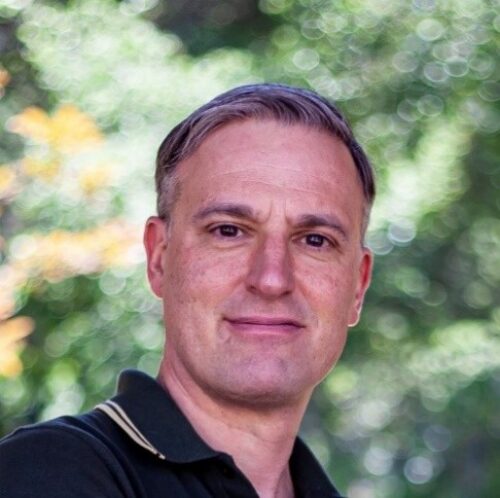
Abstract
The energy transition through increased electrification has put the world’s attention on critical mineral exploration. Despite the promise of a growing the demand, the global exploration industry is money-losing enterprise. Even with increased investments a decrease in new discoveries has taken place over the last two decades. In the paper, I propose a solution to this problem where AI and computational approaches is implemented as the enabler of a rigorous scientific method for mineral exploration that aims to reduce cognitive bias & false positives, enhances the role of domain experts and drive down the cost of exploration. The current organization of exploration activities involving many fields of science (geology, geochemistry, geophysics) is no longer an effective in discovering deposits under cover. In particular, the current approach fails to adequately quantify uncertainty, leading to sub-optimal decision-making and $ spent on drilling that are often false positives. Instead, I propose a new scientific method that is based on a philosophical approach founded on the principles of Bayesianism and falsification. In this approach, data acquisition is in the first place seen as a means to falsify human-generated hypothesis. Decision of what data to acquire next is quantified with verifiable metrics and based on rational decision making. However, in order to implement these approaches, I will show that high-performance computing, completely absent in exploration today, is essential. A practical compute platform is provided that can be used as a template in any exploration campaign. More specifically computing will be needed for 1) novel unsupervised learning methods that collaborate with domain experts to better understand massive geoscientific data and generate multiple competing geological hypotheses and 2) human-in-the-loop AI algorithms that can optimally plan various geological, geophysical, geochemical and drilling data acquisition where uncertainty reduction of geological hypothesis precedes the uncertainty reduction on grade and tonnage. I will show how this approach has led to one of the largest copper discovery this century in Zambia.
Bio
Jef Caers received both an MSc (’93) in mining engineering / geophysics and a PhD (’97) in mining engineering from the Katholieke Universiteit Leuven, Belgium. Currently, he is Professor of Earth and Planetary at Stanford University. Jef Caers has pioneered research on data science, artificial intelligence and decision making under uncertainty in developing Earth resources. As the founder of Stanford Mineral-X, Prof. Caers collaborates with the mineral exploration industry to reduce cost and improve discovery. Jef Caers has authored six books on data science and decision making that blend academic rigor with practical industrial applications. He was awarded the Krumbein Medal of the International Association of Mathematical Geosciences for his career achievement.